
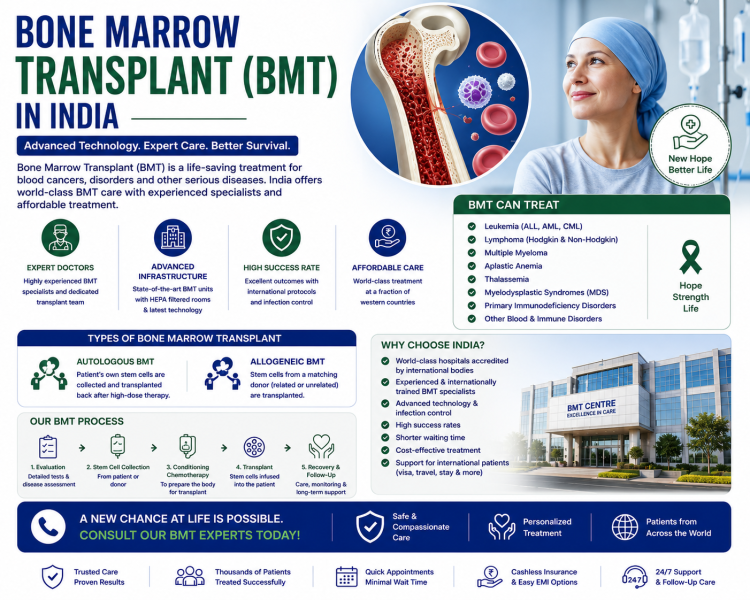
The transplant procedure itself usually takes 2 to 6 hours, while the complete treatment process, including conditioning therapy, stem cell infusion, engraftment, and early recovery, generally takes 3 to 6 weeks.
Patients usually remain hospitalized for 3 to 5 weeks, depending on the type of transplant, engraftment, and recovery progress.
General anesthesia is used only for bone marrow harvesting from the donor. The stem cell infusion itself is similar to a blood transfusion and does not require anesthesia.
18,000 to 40,000 USD*
Bone Marrow Transplant (BMT), also known as Hematopoietic Stem Cell Transplantation (HSCT), is an advanced medical procedure used to replace damaged or diseased bone marrow with healthy blood-forming stem cells. It is one of the most effective treatments for several blood cancers, bone marrow disorders, immune deficiencies, and certain genetic diseases. The procedure helps restore the body's ability to produce healthy blood cells and strengthen the immune system.
India has become one of the world's leading destinations for Bone Marrow Transplantation, offering internationally accredited hospitals, highly experienced hematologists, transplant specialists, and advanced stem cell transplant units. Every year, thousands of international patients choose India because of its excellent clinical outcomes, modern transplant facilities, shorter waiting times, and treatment costs that are significantly lower than those in many developed countries.
Recent advancements in bone marrow transplantation have significantly improved patient safety and long-term survival. Leading hospitals now utilize Next-Generation HLA Typing, Haploidentical (Half-Matched) Bone Marrow Transplants, Matched Unrelated Donor (MUD) Transplants, Reduced Intensity Conditioning (RIC), CAR-T Cell Therapy (for selected blood cancers), Cord Blood Stem Cell Transplantation, AI-assisted infection monitoring, advanced graft-versus-host disease (GVHD) prevention, precision immunotherapy, and personalized post-transplant care. These innovations have expanded treatment options while improving transplant success and reducing complications.
Whether you are diagnosed with leukemia, lymphoma, multiple myeloma, aplastic anemia, thalassemia, sickle cell disease, or other blood disorders, India offers comprehensive bone marrow transplant care supported by international standards of quality, safety, and compassionate patient care.
Patients who may require a Bone Marrow Transplant often experience:
Patients diagnosed with serious blood disorders should undergo transplant evaluation as early as possible.
Bone Marrow Transplant may be recommended for patients with:
Before transplantation, the patient undergoes a comprehensive medical evaluation to determine transplant eligibility and identify the most suitable donor.
Pre-transplant investigations may include:
International patients can submit their medical reports online for an expert opinion before travelling to India.
Bone Marrow Transplant is performed by a multidisciplinary team of hematologists, transplant physicians, oncologists, infectious disease specialists, and transplant nurses.
The transplant team identifies the most suitable donor based on HLA compatibility, medical history, and overall health.
Patients receive chemotherapy, targeted therapy, radiation therapy (when required), or reduced-intensity conditioning to eliminate diseased bone marrow and prepare the body for transplantation.
Healthy stem cells are collected either from the donor's bloodstream, bone marrow, or umbilical cord blood.
The healthy stem cells are infused into the patient's bloodstream through an intravenous line. These cells naturally migrate to the bone marrow and begin producing healthy blood cells.
The transplanted stem cells gradually establish themselves within the bone marrow and begin restoring normal blood cell production.
Modern immunosuppressive medications and immune monitoring help reduce transplant-related complications and improve long-term success.
The patient's own healthy stem cells are collected before treatment and later returned after high-dose chemotherapy. This approach is commonly used for multiple myeloma and certain lymphomas.
Healthy stem cells are obtained from a compatible donor. This is commonly performed for leukemia, aplastic anemia, and inherited blood disorders.
A half-matched family donor, such as a parent, child, or sibling, can donate stem cells using advanced transplant protocols. This has significantly increased transplant availability for patients without a fully matched donor.
Stem cells are obtained from a carefully selected unrelated donor through international donor registries.
Stem cells collected from umbilical cord blood provide another transplant option for selected patients, particularly when a suitable adult donor is unavailable.
Following transplantation, patients remain under close medical supervision while the transplanted stem cells establish normal blood formation.
Post-transplant care includes:
A successful Bone Marrow Transplant offers many patients the opportunity to achieve long-term remission or cure from serious blood disorders. As healthy stem cells begin producing normal blood cells, the immune system gradually recovers, allowing patients to return to their daily activities.
India's leading transplant centers combine advanced stem cell transplantation, precision immunotherapy, infection prevention protocols, and long-term monitoring to achieve excellent patient outcomes. Recovery varies depending on the underlying disease, transplant type, and overall health, but many patients experience a substantial improvement in quality of life after successful transplantation.
Patients who may require a Bone Marrow Transplant often experience:
Patients diagnosed with serious blood disorders should undergo transplant evaluation as early as possible.
Bone Marrow Transplant may be recommended for patients with:
Before transplantation, the patient undergoes a comprehensive medical evaluation to determine transplant eligibility and identify the most suitable donor.
Pre-transplant investigations may include:
International patients can submit their medical reports online for an expert opinion before travelling to India.
Bone Marrow Transplant is performed by a multidisciplinary team of hematologists, transplant physicians, oncologists, infectious disease specialists, and transplant nurses.
The transplant team identifies the most suitable donor based on HLA compatibility, medical history, and overall health.
Patients receive chemotherapy, targeted therapy, radiation therapy (when required), or reduced-intensity conditioning to eliminate diseased bone marrow and prepare the body for transplantation.
Healthy stem cells are collected either from the donor's bloodstream, bone marrow, or umbilical cord blood.
The healthy stem cells are infused into the patient's bloodstream through an intravenous line. These cells naturally migrate to the bone marrow and begin producing healthy blood cells.
The transplanted stem cells gradually establish themselves within the bone marrow and begin restoring normal blood cell production.
Modern immunosuppressive medications and immune monitoring help reduce transplant-related complications and improve long-term success.
Following transplantation, patients remain under close medical supervision while the transplanted stem cells establish normal blood formation.
Post-transplant care includes:
A successful Bone Marrow Transplant offers many patients the opportunity to achieve long-term remission or cure from serious blood disorders. As healthy stem cells begin producing normal blood cells, the immune system gradually recovers, allowing patients to return to their daily activities.
India's leading transplant centers combine advanced stem cell transplantation, precision immunotherapy, infection prevention protocols, and long-term monitoring to achieve excellent patient outcomes. Recovery varies depending on the underlying disease, transplant type, and overall health, but many patients experience a substantial improvement in quality of life after successful transplantation.
Yes. Bone Marrow Transplantation in India is considerably more affordable than in many developed countries while maintaining international standards of quality and safety.
Recent advancements include Haploidentical Transplantation, CAR-T Cell Therapy (selected cases), Reduced Intensity Conditioning, AI-assisted infection monitoring, precision immunotherapy, and advanced GVHD prevention.
A compatible sibling, parent, child, unrelated donor, or the patient (Autologous Transplant) may be eligible depending on the medical condition and transplant type.
Many patients achieve long-term remission or cure following transplantation. Outcomes depend on the disease, donor compatibility, patient health, and adherence to post-transplant care.
Yes. International patients receive comprehensive treatment planning, visa assistance, accommodation support, and long-term follow-up services.
Initial recovery usually takes several weeks, while complete immune recovery may take several months depending on the transplant type.

Rockland Qutab, South Delhi, B 33- 34,Qutub Institutional Area, Katwaria Sarai – New Delhi
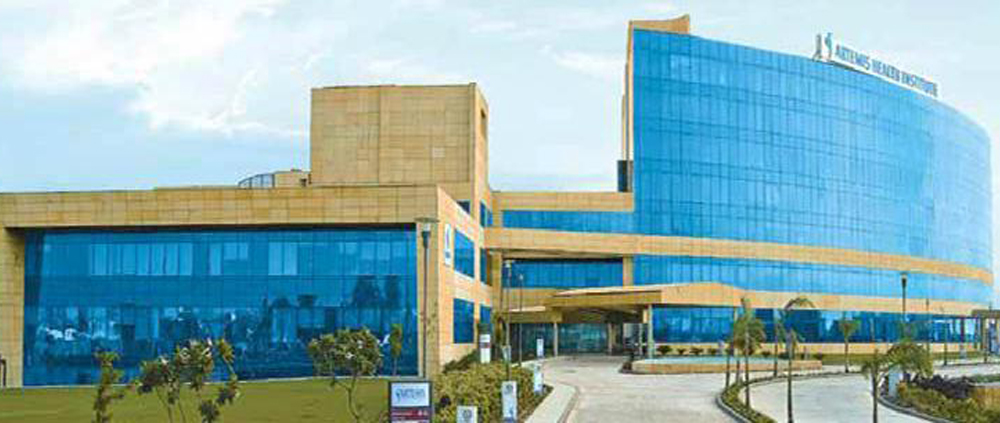
Sector 51 Gurgaon, Haryana 122 017, INDIA

Sector – 44, Opposite HUDA City Centre, Gurgaon, Haryana – 122002, India
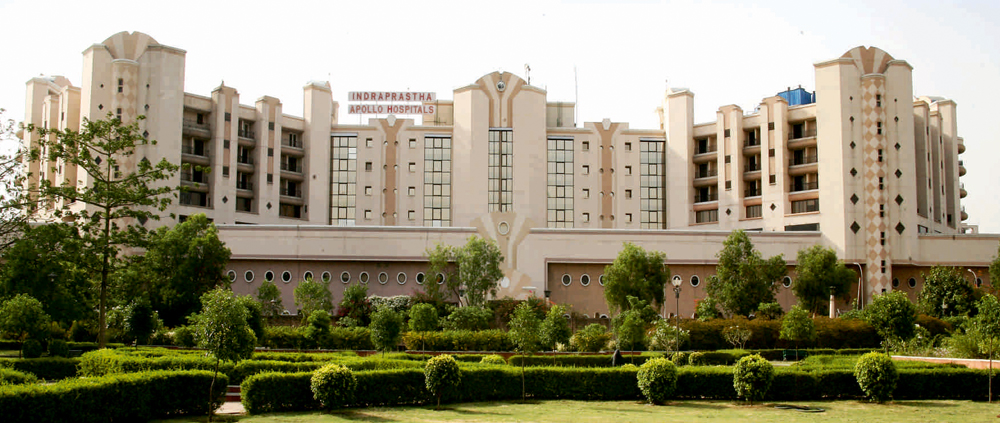
Sarita Vihar, Mathura Road, New Delhi – 110076 , INDIA