
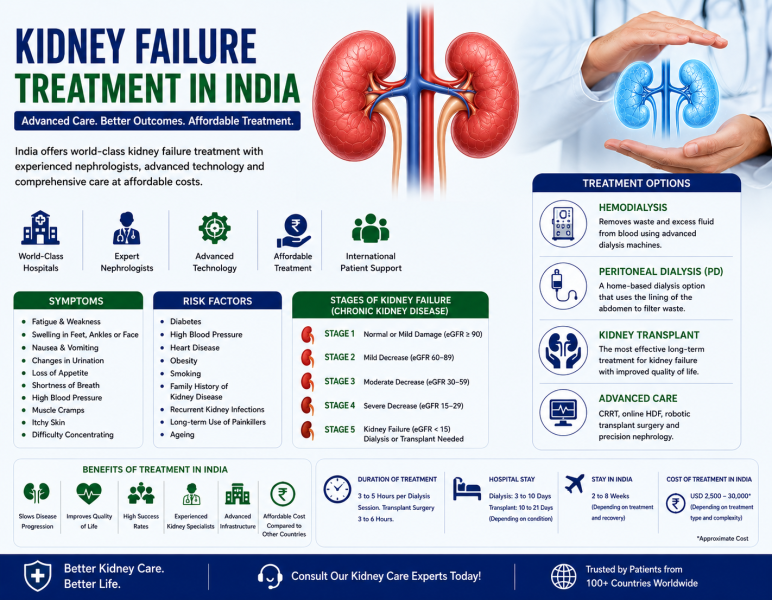
Dialysis sessions usually take 3 to 5 hours per session. Kidney transplant surgery generally takes 3 to 6 hours.
Usually 3 to 10 days in the hospital for dialysis-related treatment and 10 to 21 days for kidney transplant surgery.
Local anesthesia may be used for dialysis access procedures. General anesthesia is used for kidney transplant surgery.
2,500 to 30,000 USD*
Kidney Failure, also known as End-Stage Renal Disease (ESRD), occurs when the kidneys lose most or all of their ability to remove waste products, toxins, and excess fluids from the body. Without proper treatment, kidney failure can lead to serious complications affecting the heart, lungs, bones, and overall health. Fortunately, advances in nephrology and kidney transplantation have made it possible for patients to live longer and healthier lives.
India has become one of the world's leading destinations for affordable and advanced kidney failure treatment. International patients choose India because of its highly experienced nephrologists, world-class dialysis centers, advanced kidney transplant programs, modern hospitals, and significantly lower treatment costs compared to many Western and Middle Eastern countries.
Recent advancements in kidney care include AI-assisted kidney diagnostics, online hemodiafiltration (HDF), home dialysis programs, continuous renal replacement therapy (CRRT), robotic kidney transplant surgery, precision immunosuppressive therapy, and personalized post-transplant monitoring. These innovations help improve treatment outcomes, reduce complications, and enhance long-term survival.
Whether you require dialysis, advanced nephrology care, or a kidney transplant, India offers comprehensive kidney failure treatment with international standards of quality, safety, and patient support.
Kidney failure may cause:
Patients experiencing these symptoms should seek immediate medical evaluation.
Common causes and risk factors include:
Early management of these conditions can help prevent kidney failure.
Before treatment, specialists perform a comprehensive kidney evaluation.
Diagnostic tests may include:
International patients can share reports online for preliminary assessment before travel.
Treatment depends on the stage and severity of kidney failure.
Hemodialysis removes toxins and excess fluids from the blood using advanced dialysis machines. Most patients require dialysis multiple times per week.
A home-based dialysis treatment that uses the lining of the abdomen to filter waste products from the body.
An advanced form of dialysis that provides better toxin removal and improved patient comfort.
Used in critically ill patients with severe kidney dysfunction and unstable medical conditions.
Kidney transplant is considered the most effective long-term treatment for eligible patients with end-stage kidney failure.
One of the latest advancements in kidney transplantation, offering greater precision, reduced complications, smaller incisions, and faster recovery.
Advanced diagnostics and personalized treatment plans help optimize kidney care and improve outcomes.
After treatment, patients receive ongoing monitoring and support.
Post-treatment care may include:
Long-term follow-up is essential for maintaining health and preventing complications.
India has achieved excellent outcomes in kidney failure treatment due to advanced technology, experienced nephrologists, and modern transplant programs.
Recent innovations such as robotic kidney transplantation, precision immunosuppression, AI-assisted diagnostics, advanced dialysis systems, and personalized treatment plans have significantly improved patient survival and quality of life.
Leading kidney transplant centers in India report success rates comparable to leading international programs.
Kidney failure may cause:
Patients experiencing these symptoms should seek immediate medical evaluation.
Common causes and risk factors include:
Early management of these conditions can help prevent kidney failure.
Before treatment, specialists perform a comprehensive kidney evaluation.
Diagnostic tests may include:
International patients can share reports online for preliminary assessment before travel.
Treatment depends on the stage and severity of kidney failure.
Hemodialysis removes toxins and excess fluids from the blood using advanced dialysis machines. Most patients require dialysis multiple times per week.
A home-based dialysis treatment that uses the lining of the abdomen to filter waste products from the body.
An advanced form of dialysis that provides better toxin removal and improved patient comfort.
Used in critically ill patients with severe kidney dysfunction and unstable medical conditions.
Kidney transplant is considered the most effective long-term treatment for eligible patients with end-stage kidney failure.
One of the latest advancements in kidney transplantation, offering greater precision, reduced complications, smaller incisions, and faster recovery.
Advanced diagnostics and personalized treatment plans help optimize kidney care and improve outcomes.
After treatment, patients receive ongoing monitoring and support.
Post-treatment care may include:
Long-term follow-up is essential for maintaining health and preventing complications.
India has achieved excellent outcomes in kidney failure treatment due to advanced technology, experienced nephrologists, and modern transplant programs.
Recent innovations such as robotic kidney transplantation, precision immunosuppression, AI-assisted diagnostics, advanced dialysis systems, and personalized treatment plans have significantly improved patient survival and quality of life.
Leading kidney transplant centers in India report success rates comparable to leading international programs.
Yes. Kidney failure treatment in India is significantly more affordable than in many countries while maintaining international standards of care.
The best treatment depends on the patient's condition. Options include hemodialysis, peritoneal dialysis, and kidney transplantation.
Recent advancements include robotic kidney transplant surgery, online hemodiafiltration (HDF), AI-assisted kidney diagnostics, precision immunosuppression, and remote patient monitoring.
Yes. India is globally recognized for advanced kidney transplant programs with excellent success rates and experienced transplant surgeons.
Modern kidney transplant surgery has high success rates when performed by experienced specialists and followed by proper post-transplant care.
Yes. International patients receive assistance with medical visas, accommodation, airport transfers, interpreters, and post-treatment follow-up.

Rockland Qutab, South Delhi, B 33- 34,Qutub Institutional Area, Katwaria Sarai – New Delhi
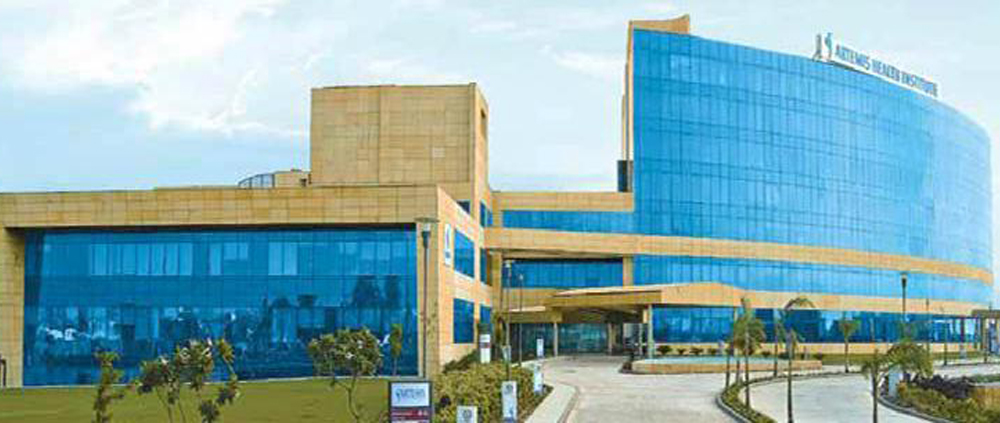
Sector 51 Gurgaon, Haryana 122 017, INDIA
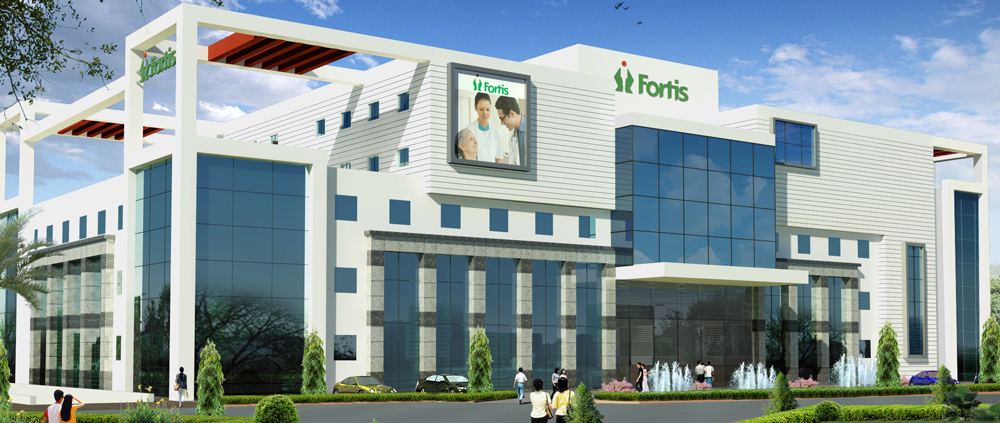
Sector – 44, Opposite HUDA City Centre, Gurgaon, Haryana – 122002, India
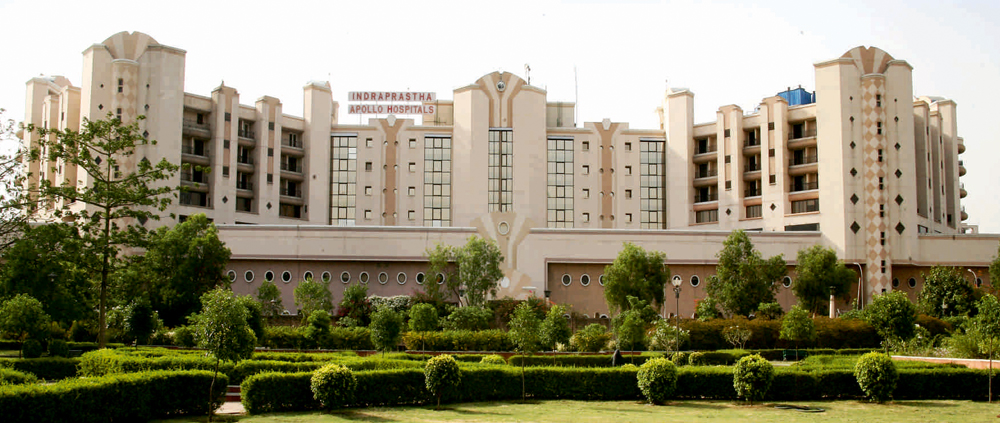
Sarita Vihar, Mathura Road, New Delhi – 110076 , INDIA