
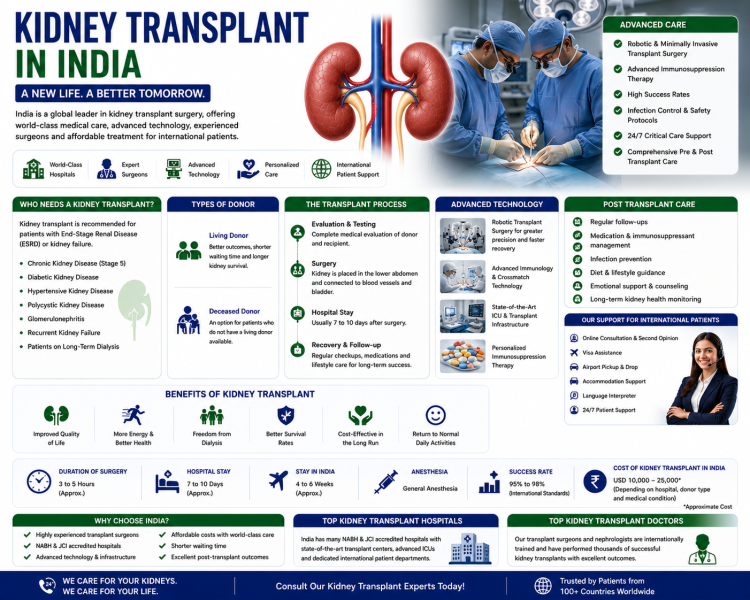
Usually takes 3 to 6 hours depending on donor compatibility, surgical complexity, and patient condition.
Usually 7 to 14 days in the hospital for both surgery and post-operative monitoring..duration of stay in India 2-3 Months
General anesthesia is used during kidney transplant surgery.
13,000 to 20,000 USD*
A kidney transplant is a life-changing surgical procedure that replaces a failed or severely damaged kidney with a healthy kidney from a compatible donor. It is considered the most effective long-term treatment for End-Stage Renal Disease (ESRD) and advanced kidney failure, allowing patients to live healthier, more active lives without relying on regular dialysis.
India has become one of the world's leading destinations for kidney transplant surgery due to its highly experienced transplant surgeons, internationally accredited hospitals, advanced medical technology, and affordable treatment costs. Every year, thousands of international patients choose India for kidney transplantation because of shorter waiting times, excellent clinical outcomes, and comprehensive patient support services.
Recent advancements in kidney transplantation have significantly improved patient outcomes. Leading hospitals now use robotic-assisted transplant surgery, advanced tissue matching techniques, precision immunosuppressive therapy, AI-assisted transplant monitoring, minimally invasive donor nephrectomy, and personalized post-transplant care programs. These innovations help reduce complications, improve graft survival, and enhance long-term quality of life.
Whether you are suffering from chronic kidney disease, kidney failure, diabetic nephropathy, or long-term dialysis dependency, India offers world-class kidney transplant care with international standards of safety, quality, and affordability.
Patients who may require a kidney transplant often experience:
A transplant evaluation is usually recommended when kidney function declines significantly.
Conditions that commonly lead to kidney transplantation include:
Early treatment can help slow disease progression, but advanced cases may require transplantation.
Before a kidney transplant, both donor and recipient undergo comprehensive medical evaluation.
Tests may include:
International patients can send medical reports for preliminary review before travelling to India.
A healthy and compatible donor is identified through detailed medical testing and tissue matching.
The recipient undergoes comprehensive health evaluation to ensure suitability for transplantation.
During the procedure, the healthy donor kidney is transplanted into the recipient's lower abdomen and connected to blood vessels and the urinary system.
The most common transplant option, offering excellent outcomes and shorter waiting periods.
Suitable for patients who do not have a living donor available.
One of the latest advancements in transplant care, robotic technology provides greater precision, smaller incisions, less pain, and faster recovery.
Advanced laparoscopic techniques help donors recover more quickly with reduced discomfort.
Personalized medication plans help reduce rejection risk while minimizing side effects.
Recovery after kidney transplantation involves careful monitoring and long-term follow-up.
Post-transplant care may include:
Proper follow-up care plays a crucial role in maintaining long-term transplant success.
A successful kidney transplant can dramatically improve quality of life, allowing patients to regain independence and return to many normal daily activities without regular dialysis.
India is recognized globally for its advanced transplant programs, experienced surgical teams, modern transplant ICUs, and comprehensive post-transplant care systems. Leading hospitals follow internationally accepted protocols for donor safety, transplant surgery, infection prevention, and long-term monitoring.
Recent advancements such as robotic-assisted transplantation, precision immunosuppression, advanced tissue compatibility testing, and AI-assisted transplant monitoring have further improved patient outcomes and graft survival.
Many international patients from Africa and other regions successfully undergo kidney transplantation in India and return home with improved health, increased energy levels, and a renewed quality of life. Long-term outcomes depend on donor compatibility, adherence to medication, regular follow-up care, and overall health management.
Patients who may require a kidney transplant often experience:
A transplant evaluation is usually recommended when kidney function declines significantly.
Conditions that commonly lead to kidney transplantation include:
Early treatment can help slow disease progression, but advanced cases may require transplantation.
Before a kidney transplant, both donor and recipient undergo comprehensive medical evaluation.
Tests may include:
International patients can send medical reports for preliminary review before travelling to India.
A healthy and compatible donor is identified through detailed medical testing and tissue matching.
The recipient undergoes comprehensive health evaluation to ensure suitability for transplantation.
During the procedure, the healthy donor kidney is transplanted into the recipient's lower abdomen and connected to blood vessels and the urinary system.
The most common transplant option, offering excellent outcomes and shorter waiting periods.
Suitable for patients who do not have a living donor available.
One of the latest advancements in transplant care, robotic technology provides greater precision, smaller incisions, less pain, and faster recovery.
Advanced laparoscopic techniques help donors recover more quickly with reduced discomfort.
Personalized medication plans help reduce rejection risk while minimizing side effects.
Recovery after kidney transplantation involves careful monitoring and long-term follow-up.
Post-transplant care may include:
Proper follow-up care plays a crucial role in maintaining long-term transplant success.
A successful kidney transplant can dramatically improve quality of life, allowing patients to regain independence and return to many normal daily activities without regular dialysis.
India is recognized globally for its advanced transplant programs, experienced surgical teams, modern transplant ICUs, and comprehensive post-transplant care systems. Leading hospitals follow internationally accepted protocols for donor safety, transplant surgery, infection prevention, and long-term monitoring.
Recent advancements such as robotic-assisted transplantation, precision immunosuppression, advanced tissue compatibility testing, and AI-assisted transplant monitoring have further improved patient outcomes and graft survival.
Many international patients from Africa and other regions successfully undergo kidney transplantation in India and return home with improved health, increased energy levels, and a renewed quality of life. Long-term outcomes depend on donor compatibility, adherence to medication, regular follow-up care, and overall health management.
Yes. Kidney transplant surgery in India is significantly more affordable than in many countries while maintaining international standards of care.
A healthy, compatible family member or approved donor may be eligible to donate a kidney after comprehensive evaluation.
Recent advancements include robotic transplant surgery, precision immunosuppressive therapy, AI-assisted monitoring, advanced tissue matching, and minimally invasive donor nephrectomy.
Many transplanted kidneys function successfully for years or even decades with proper care and medication adherence.
Yes. India is internationally recognized for advanced transplant programs, experienced surgeons, modern hospitals, and affordable treatment costs.
Yes. International patients receive assistance with medical visas, accommodation, airport transfers, interpreters, and post-treatment follow-up.

Rockland Qutab, South Delhi, B 33- 34,Qutub Institutional Area, Katwaria Sarai – New Delhi
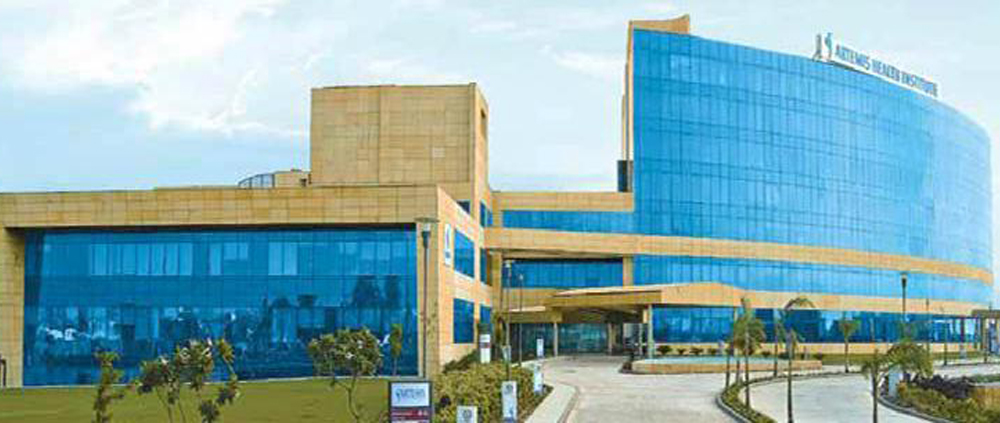
Sector 51 Gurgaon, Haryana 122 017, INDIA
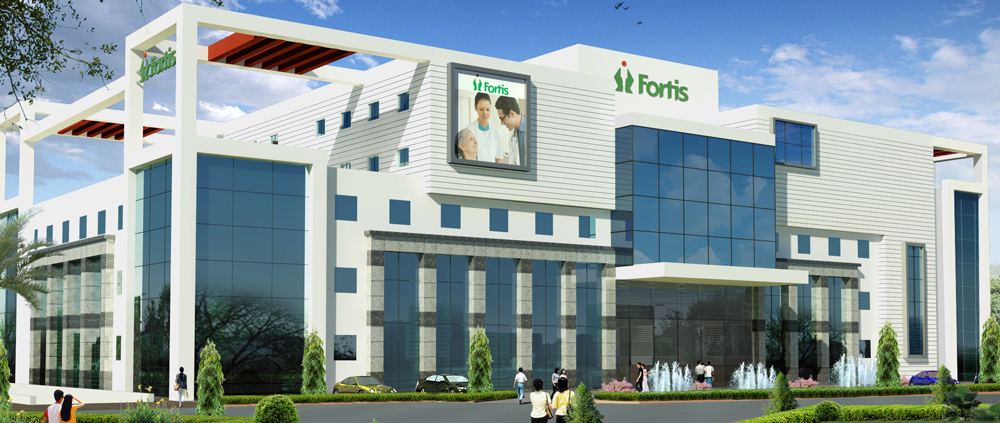
Sector – 44, Opposite HUDA City Centre, Gurgaon, Haryana – 122002, India
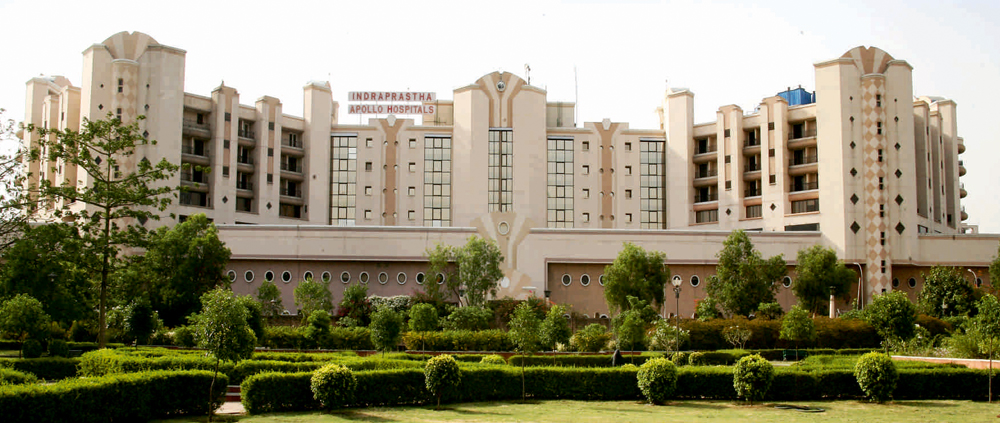
Sarita Vihar, Mathura Road, New Delhi – 110076 , INDIA