
Usually takes 45 minutes to 2 hours depending on the size, number, and location of the kidney stones.
Usually 1 to 2 days in the hospital depending on the patient's recovery and whether a temporary DJ stent is placed.
General anesthesia is commonly used during RIRS surgery.
2,000 to 5,000 USD*
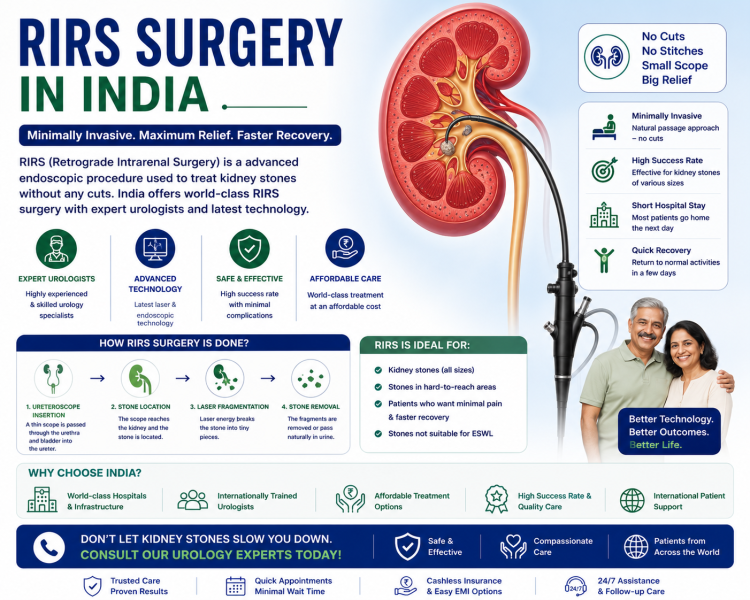
Retrograde Intrarenal Surgery (RIRS) is one of the most advanced minimally invasive procedures for removing kidney stones without making any external incision. During the procedure, a flexible ureteroscope is passed through the natural urinary tract into the kidney, where a high-powered laser breaks the stones into tiny fragments for easy removal or natural passage. RIRS is highly effective for treating small to medium-sized kidney stones, recurrent stones, lower pole stones, and stones located in difficult-to-reach areas of the kidney.
India has become one of the world's leading destinations for affordable and advanced RIRS surgery. Every year, thousands of international patients choose India because of its experienced urologists, internationally accredited hospitals, advanced laser technology, shorter waiting times, and treatment costs that are significantly lower than those in many developed countries.
Recent advancements in kidney stone treatment have made RIRS safer, more precise, and highly successful. Leading hospitals now use Digital Flexible Ureteroscopes, Thulium Fiber Laser (TFL), Holmium Laser Lithotripsy, AI-assisted stone analysis, disposable flexible ureteroscopes, high-definition digital imaging, laser dusting techniques, and precision endourology systems. These innovations improve stone clearance, reduce complications, preserve kidney function, and allow faster recovery with minimal discomfort.
Whether you have recurrent kidney stones, lower pole stones, stones in a single kidney, or stones unsuitable for shock wave therapy, India offers advanced RIRS treatment with excellent clinical outcomes and comprehensive support for international patients.
Patients who may require RIRS surgery often experience:
Early treatment helps prevent kidney damage and recurrent infections.
Several factors increase the risk of kidney stone formation, including:
Healthy dietary habits and adequate hydration help reduce the risk of recurrence.
Before RIRS surgery, specialists perform a comprehensive evaluation to determine the size, location, and type of kidney stone.
Diagnostic tests may include:
International patients are encouraged to share their medical reports before travelling for personalized treatment planning.
The urologist carefully reviews diagnostic scans to determine whether RIRS is the most suitable treatment option.
A highly flexible digital ureteroscope is passed through the natural urinary tract into the kidney without making any surgical incision.
Advanced Holmium Laser or Thulium Fiber Laser technology breaks kidney stones into microscopic fragments using precision laser energy.
Tiny stone fragments are removed using specialized stone retrieval baskets or allowed to pass naturally through urine.
A temporary ureteral stent may be placed to ensure proper urine drainage and facilitate healing.
High-definition digital imaging provides superior visualization, allowing surgeons to remove stones with greater precision.
Advanced software helps evaluate stone characteristics and supports personalized treatment planning and recurrence prevention.
Recovery after RIRS surgery is generally rapid due to its minimally invasive approach.
Post-operative care includes:
Most patients can return to normal daily activities within a few days.
RIRS has become one of the preferred treatments for kidey stones because it provides excellent stone clearance while avoiding large incisions and prolonged recovery. Most patients experience minimal discomfort, shorter hospital stays, and a rapid return to their normal lifestyle.
Leading urology centers in India combine advanced laser technology, digital flexible ureteroscopes, experienced endourologists, and personalized follow-up care to achieve excellent long-term outcomes. Patients are advised to maintain proper hydration, adopt healthy dietary habits, and undergo periodic kidney evaluations to reduce the risk of future stone formation.
Patients who may require RIRS surgery often experience:
Early treatment helps prevent kidney damage and recurrent infections.
Several factors increase the risk of kidney stone formation, including:
Healthy dietary habits and adequate hydration help reduce the risk of recurrence.
Before RIRS surgery, specialists perform a comprehensive evaluation to determine the size, location, and type of kidney stone.
Diagnostic tests may include:
International patients are encouraged to share their medical reports before travelling for personalized treatment planning.
The urologist carefully reviews diagnostic scans to determine whether RIRS is the most suitable treatment option.
A highly flexible digital ureteroscope is passed through the natural urinary tract into the kidney without making any surgical incision.
Advanced Holmium Laser or Thulium Fiber Laser technology breaks kidney stones into microscopic fragments using precision laser energy.
Tiny stone fragments are removed using specialized stone retrieval baskets or allowed to pass naturally through urine.
A temporary ureteral stent may be placed to ensure proper urine drainage and facilitate healing.
High-definition digital imaging provides superior visualization, allowing surgeons to remove stones with greater precision.
Advanced software helps evaluate stone characteristics and supports personalized treatment planning and recurrence prevention.
Recovery after RIRS surgery is generally rapid due to its minimally invasive approach.
Post-operative care includes:
Most patients can return to normal daily activities within a few days.
RIRS has become one of the preferred treatments for kidney stones because it provides excellent stone clearance while avoiding large incisions and prolonged recovery. Most patients experience minimal discomfort, shorter hospital stays, and a rapid return to their normal lifestyle.
Leading urology centers in India combine advanced laser technology, digital flexible ureteroscopes, experienced endourologists, and personalized follow-up care to achieve excellent long-term outcomes. Patients are advised to maintain proper hydration, adopt healthy dietary habits, and undergo periodic kidney evaluations to reduce the risk of future stone formation.
Yes. RIRS surgery in India is significantly more affordable than in many countries while maintaining international standards of urological care.
Recent advancements include Digital Flexible Ureteroscopy, Thulium Fiber Laser (TFL), Holmium Laser Lithotripsy, AI-assisted stone analysis, disposable ureteroscopes, and high-definition digital imaging.
Yes. RIRS is a minimally invasive procedure performed without external incisions, resulting in less pain, minimal blood loss, faster recovery, and lower complication rates.
Most patients resume their routine activities within 3 to 7 days, depending on the size of the stone and overall health.
Yes. India is internationally recognized for advanced kidney stone treatment, experienced urologists, world-class hospitals, and affordable healthcare.
Yes. International patients receive assistance with medical visas, accommodation, airport transfers, interpreter services, and post-treatment follow-up.

Rockland Qutab, South Delhi, B 33- 34,Qutub Institutional Area, Katwaria Sarai – New Delhi
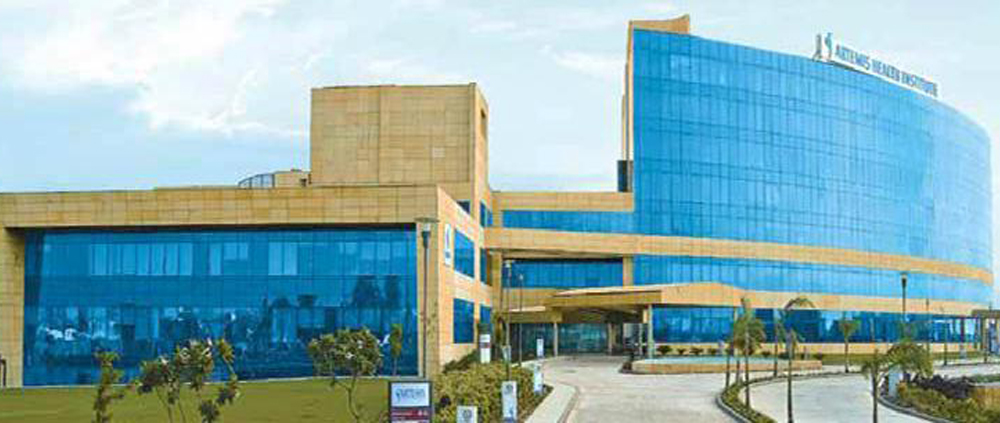
Sector 51 Gurgaon, Haryana 122 017, INDIA
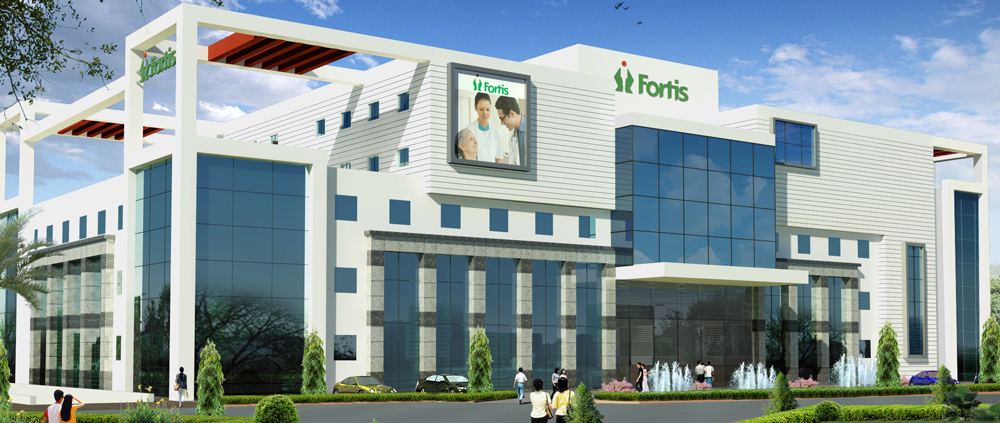
Sector – 44, Opposite HUDA City Centre, Gurgaon, Haryana – 122002, India
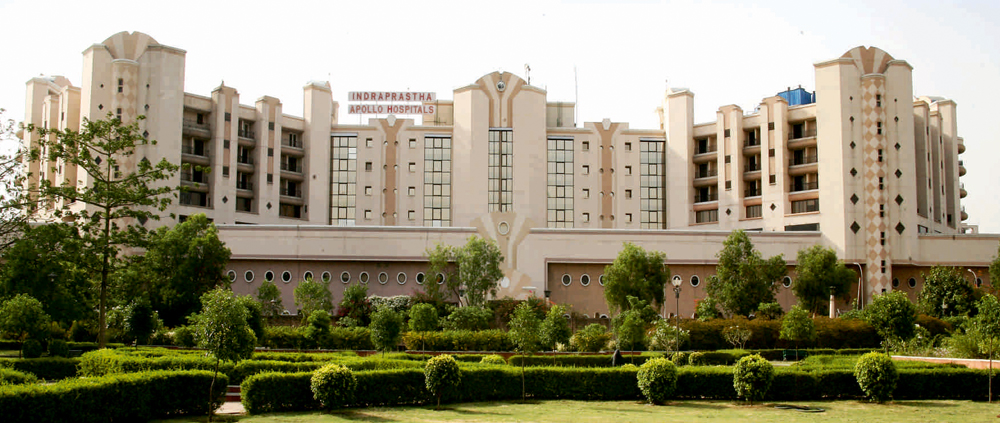
Sarita Vihar, Mathura Road, New Delhi – 110076 , INDIA