
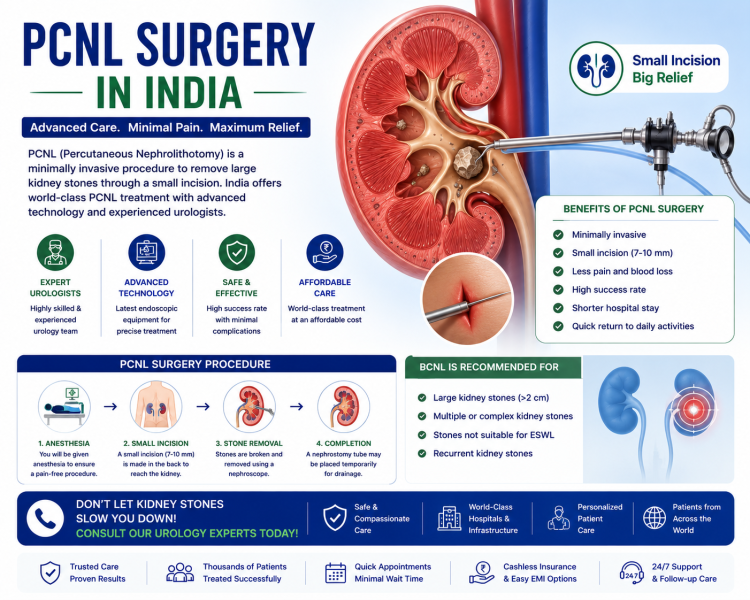
Usually takes 1 to 3 hours depending on the size, number, and complexity of the kidney stones.
Usually 2 to 4 days in the hospital depending on recovery and whether a nephrostomy tube or stent is required.
General anesthesia is commonly used during PCNL surgery.
2,500 to 4,500 USD*
Percutaneous Nephrolithotomy (PCNL) is a highly effective minimally invasive surgical procedure used to remove large, complex, or multiple kidney stones that cannot be treated with medication or shock wave therapy. Through a small incision in the back, a specialized endoscope is inserted directly into the kidney to safely remove stones with minimal damage to surrounding tissues. PCNL is considered the gold standard for treating kidney stones larger than 2 cm and complex staghorn calculi.
India has become one of the leading destinations for affordable and advanced PCNL surgery, offering internationally trained urologists, modern hospitals, and state-of-the-art stone management technology. Every year, thousands of international patients choose India because of its high-quality healthcare, experienced surgeons, shorter waiting times, and treatment costs that are significantly lower than those in many Western countries.
Recent advancements in kidney stone surgery have made PCNL safer and more effective than ever before. Leading hospitals now offer Mini-PCNL, Ultra Mini-PCNL, Super Mini-PCNL (SMP), Micro-PCNL, ultrasound-guided access, digital nephroscopy, Holmium Laser Lithotripsy, Thulium Fiber Laser (TFL), AI-assisted surgical planning, and enhanced recovery protocols. These innovations reduce bleeding, preserve kidney tissue, shorten hospital stays, and promote faster recovery.
Whether you have large kidney stones, recurrent stones, staghorn calculi, or stones that have not responded to previous treatment, India provides advanced PCNL surgery with excellent clinical outcomes and comprehensive international patient support.
Patients requiring PCNL surgery may experience:
Prompt treatment helps prevent kidney damage and recurrent infections.
Factors that increase the risk of large kidney stones include:
Lifestyle changes and regular follow-up can reduce the risk of recurrence.
Before PCNL surgery, specialists evaluate the size, location, and complexity of the kidney stone.
Diagnostic tests may include:
International patients are encouraged to share their medical reports before travelling for personalized treatment planning.
The surgical team evaluates imaging studies and selects the safest access route to the kidney.
A small incision (approximately 1 cm) is made in the back, and a narrow channel is created to reach the kidney.
Advanced Holmium Laser or Thulium Fiber Laser technology is used to break large stones into smaller fragments.
Specialized instruments remove stone fragments while preserving healthy kidney tissue.
A newer minimally invasive technique using smaller instruments that reduces pain, bleeding, and recovery time.
Advanced innovations designed for selected patients with medium-sized stones, offering faster recovery and improved patient comfort.
High-definition digital imaging provides excellent visualization, allowing surgeons to remove stones more precisely.
Depending on the patient's condition, surgeons may use a temporary drainage tube or perform a tubeless PCNL for faster recovery.
Recovery after PCNL surgery is generally rapid due to its minimally invasive nature.
Post-operative care includes:
Most patients resume normal daily activities within 1 to 2 weeks.
PCNL is one of the most successful treatments for large and complex kidney stones. Modern minimally invasive techniques allow patients to recover faster, experience less postoperative discomfort, and achieve a high stone-free rate.
Leading hospitals in India combine advanced laser technology, digital nephroscopy, experienced urologists, and personalized follow-up care to provide excellent long-term outcomes. After successful treatment, patients are advised to maintain adequate hydration, adopt dietary modifications, and undergo periodic kidney evaluations to minimize the risk of future stone formation.
Patients requiring PCNL surgery may experience:
Prompt treatment helps prevent kidney damage and recurrent infections.
Factors that increase the risk of large kidney stones include:
Lifestyle changes and regular follow-up can reduce the risk of recurrence.
Before PCNL surgery, specialists evaluate the size, location, and complexity of the kidney stone.
Diagnostic tests may include:
International patients are encouraged to share their medical reports before travelling for personalized treatment planning.
The surgical team evaluates imaging studies and selects the safest access route to the kidney.
A small incision (approximately 1 cm) is made in the back, and a narrow channel is created to reach the kidney.
Advanced Holmium Laser or Thulium Fiber Laser technology is used to break large stones into smaller fragments.
Specialized instruments remove stone fragments while preserving healthy kidney tissue.
A newer minimally invasive technique using smaller instruments that reduces pain, bleeding, and recovery time.
Advanced innovations designed for selected patients with medium-sized stones, offering faster recovery and improved patient comfort.
High-definition digital imaging provides excellent visualization, allowing surgeons to remove stones more precisely.
Depending on the patient's condition, surgeons may use a temporary drainage tube or perform a tubeless PCNL for faster recovery.
Recovery after PCNL surgery is generally rapid due to its minimally invasive nature.
Post-operative care includes:
Most patients resume normal daily activities within 1 to 2 weeks.
PCNL is one of the most successful treatments for large and complex kidney stones. Modern minimally invasive techniques allow patients to recover faster, experience less postoperative discomfort, and achieve a high stone-free rate.
Leading hospitals in India combine advanced laser technology, digital nephroscopy, experienced urologists, and personalized follow-up care to provide excellent long-term outcomes. After successful treatment, patients are advised to maintain adequate hydration, adopt dietary modifications, and undergo periodic kidney evaluations to minimize the risk of future stone formation.
Yes. PCNL surgery in India is considerably more affordable than in many countries while maintaining international standards of urological care.
Recent advancements include Mini-PCNL, Ultra Mini-PCNL, Super Mini-PCNL, Micro-PCNL, Holmium Laser, Thulium Fiber Laser (TFL), digital nephroscopy, and AI-assisted surgical planning.
Yes. PCNL is minimally invasive, causes less pain, requires a smaller incision, results in less blood loss, and offers faster recovery than traditional open surgery.
Most patients return to normal daily activities within 1 to 2 weeks, depending on the complexity of the procedure.
Yes. India is internationally recognized for advanced kidney stone treatment, experienced urologists, modern hospitals, and affordable treatment costs.
Yes. International patients receive assistance with medical visas, accommodation, airport transfers, interpreter services, and post-treatment follow-up.
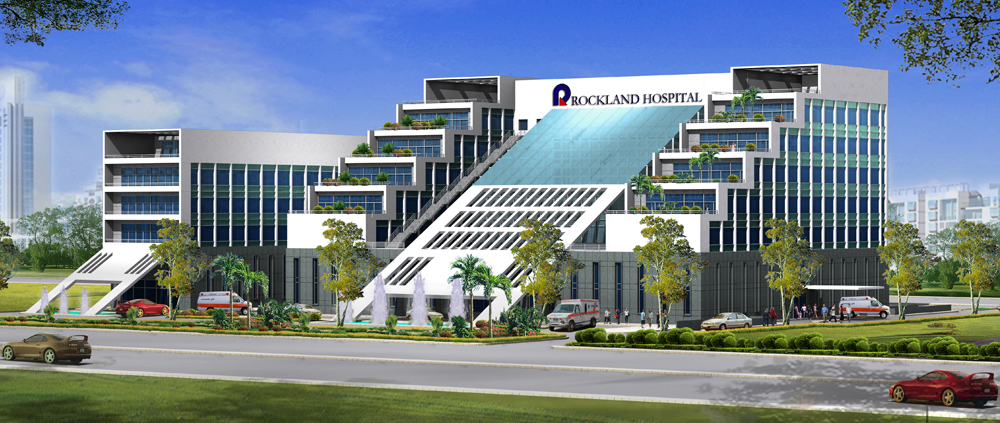
Rockland Qutab, South Delhi, B 33- 34,Qutub Institutional Area, Katwaria Sarai – New Delhi
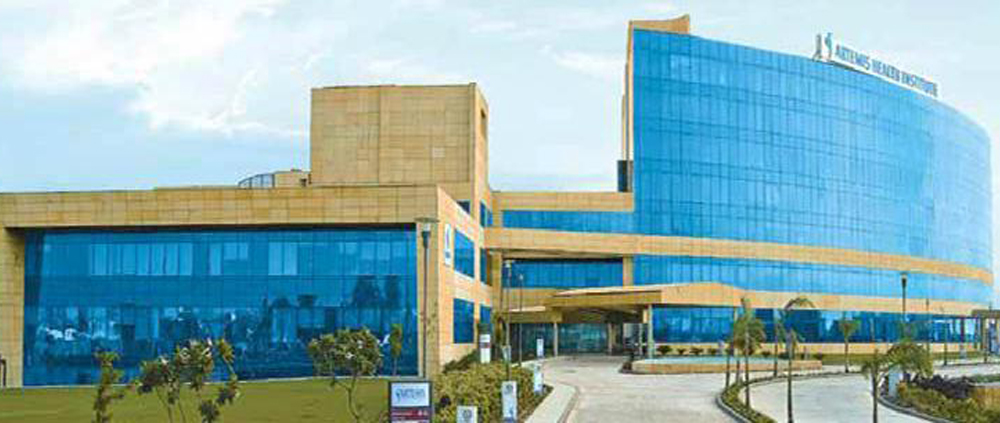
Sector 51 Gurgaon, Haryana 122 017, INDIA
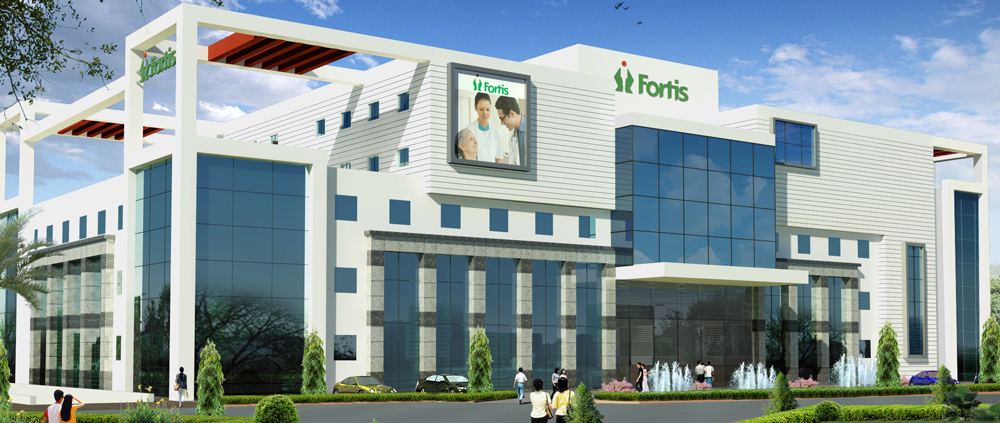
Sector – 44, Opposite HUDA City Centre, Gurgaon, Haryana – 122002, India
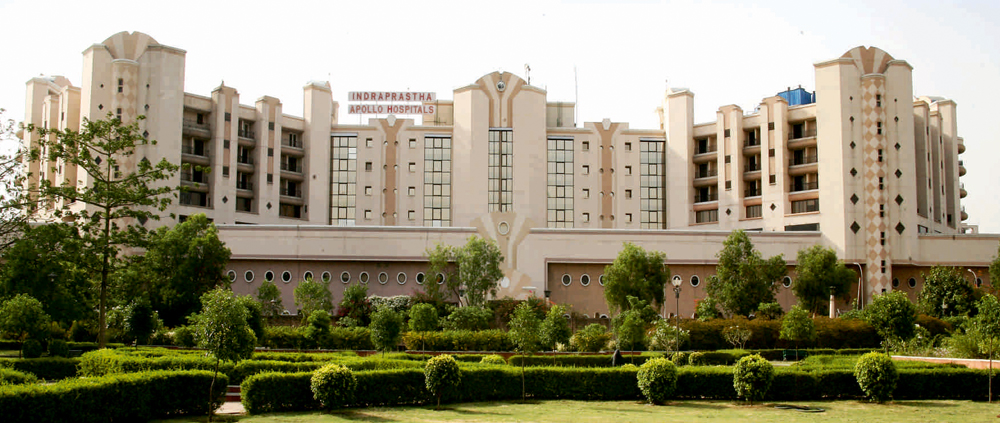
Sarita Vihar, Mathura Road, New Delhi – 110076 , INDIA